Showing posts with label Lecture. Show all posts

Sunday, February 27, 2011

Road Trip To Widener, A George Saunders Reading

At 5:30 in the morning Dr. Dent drove the university van right up to the doors of our dormitory, and six of us writing majors sequeezed in a for the three-hour drive to Widener University, where we would get to meet essayist and short story writer George Saunders.

Saunders, whose quirky stories frequently appear in magazines like The New Yorker, Harper's, and Esquire, recently appeared on the Tonight Show with David Letterman promoting his newest book, a collection of essays titled The Braindead Megaphone.

Widener University is located in Chester, Pennsylvania, about nine miles south of Center City Philadelphia. Susquehanna connected with Widener through FUSE, the Forum for Undergraduate Student Editors, a burgeoning network of student writers and editors who share ideas and review student-run literary magazines.

The faculty at Widener graciously invited Dr. Dent and some of her students to come to their campus for the Saunders reading. Emphasis on "graciously." Not only were we able to attend the reading, we were also able to sit in on a class discussion with Saunders and eat lunch with the author. The students and faculty from Widener were just wonderful.

As was Saunders. When we pulled into the parking lot at Widener, I wasn't sure what to expect. Saunder's work is so quirky and surreal, like "The 400-Pound CEO," which chronicles the rise and fall of an overweight employee at "Humane Raccoon Alternatives," or "Sea Oak," in which Aunt Bernie returns from the grave. As it turns out, the man behind these stories is warm and thoughtful and very smart about writing.

At the reading, he performed a story he published about two years ago in The New Yorker called "Victory Lap." I say "performed" because he did a different voice for every character. The story is excellent, hilarious all the way through and deeply meaningful at the end. Rather than spoil it by summarizing it here, I'm simply going to recommend that you read the story for yourself. The entire thing can be found on The New Yorker website.

After the reading, we got our books signed and then piled back in the van for the three-hour drive back to Selinsgrove, exhausted, but grateful to have made the trip.

Below are two videos. The first is a Widener video of the actual conversation we had with Saunders during our time in Chester. Below that is a video of a short reading Saunders gave for a Minnesota Public Radio event. The story is "Pastoralia," not "Victory Lap," but it's still definitely worth checking out. It'll give you a really great sense of his voice as a writer.

A Conversation with George Saunders at Widener University


George Saunders reading from "Pastoralia"


Other Links:
"Victory Lap" by George Saunders
George Saunders on David Letterman
The FUSE Blog
The FUSE Website
The Blue Route - Widener University's Online Literary Magazine

Wednesday, November 17, 2010

Writers Institute Ribbon Cutting

Susquehanna’s creative writing department has officially moved from the lower level of Hassinger Hall into a building of their own, and I got to attend the ribbon cutting ceremony.

What was once the parish attached to the St. Pius X Catholic church (the congregation has since moved to a larger facility about a block away) is now the new writers house. Completely renovated, the house is now filled with dark wood floors, faculty offices, a conference room, a classroom, and shelves and shelves of books, books written and signed by visiting writers and our own professors as well as plenty of copies of SU's student-run literary magazines and a whole host of chapbooks featuring the work of past SU writing majors.

Before the cutting of the ribbon, Dr. Fincke, our department head, gave a brief speech tracing the history of SU’s writing program, from when it started with three minors in 1992 up through to today—the program is now thriving with 152 majors and 20 minors.  A friend of mine caught the whole speech on tape:


Then, after the speech, the writing faculty armed themselves with scissors and officially opened the new building:


  • For a more on Susquehanna's writing program, read some of my other Campus Life posts about the Writers Institute, or visit my other blog, Workshop, and follow me through my freshman Intro to Fiction workshop class.

Thursday, November 4, 2010

Meeting Steve Yarbrough


When I read Steve Yarbrough, I’m reminded that stories matter. In deep weird ways, stories are a part of who we are.

Like in the title story from his collection Veneer. The narrator sits in a restaurant with an old friend, and he tells her about his worst Fourth of July ever: the summer before his family lost their farm, when they splurged on a grill and some steaks and pretended it was the best meal they’d ever had even though they’d accidentally burnt the meat to a crisp.

The way I tell it, it’s just an anecdote, but in Steve Yarbrough’s hands, this story tells us everything we need to know about the affair the narrator’s about to have.

What I love about Yarbrough’s stories is the way he layers them, stories within stories, the past on top of the present. When you finish his stories, you never quite arrive where you thought you would, but you know you’re in the right place.

He knows how to tell stories. He’s published five novels and three short story collections. His work has appeared in the Best American Short Stories, Best American Mystery Stories, and the Pushcart Prize Anthology. He’s the winner of the California Book Award, the Mississippi Authors Award, and the Mississippi Institute of Arts and Letters Award for Fiction. His novel Prisoners of War was a finalist for the 2005 PEN/Faulkner Award. He’s also chair of the writing department at Emerson College in Boston.

So it goes without saying I was a little nervous about meeting Steve Yarbrough in person to hear what he thought of my own writing.

Every year Susquehanna’s Writers Institute brings about six acclaimed authors to campus through its Visiting Writers Series. Not only do these writers give Q&As and readings here on campus, often they will also guest-teach classes, have lunch with students, and meet one-on-one with upperclassman writing majors to discuss each student’s work.

That was me, the upperclassman writing major, popping another breath mint as I headed down the sidewalk to the Writers House for my conference with Steve Yarbrough. But it turned out I was nervous in vain—not only is Steve Yarbrough a great writer, he’s also a really nice guy.

He told me he enjoyed my stories and asked me about my background, we ended up talking about our families and books we’ve enjoyed (he recommended about a dozen and I wrote them all down in the margins of one of my manuscripts) and we talked about the grad programs I’m applying to. Our thirty-minute meeting spilled over well into four o’clock, and he ended up shaking my hand three times before I left the building.

      
    More books by Visiting Writers
    (click for larger view)
    
    • Check out all of Susquehanna’s past and current Visiting Writers by clicking here.
    • For a more in-depth look at Susquehanna's writing program, visit my other blog, Workshop, and follow me through my freshman year.
    • For more information on SU's writing program, as well as pictures, video, faculty bios, and excerpts of writing from Susquehanna students past and present, visit The Writers Institute website.

    Tuesday, April 20, 2010

    The Canals of Mars

    Last Monday, students like myself as well as professors from the English and Creative Writing Department gathered in Isaacs Auditorium to hear a reading from Susquehanna’s own Gary Fincke, head of our creative writing department and author of twenty-two books of poetry, essays, and short stories.

    Sitting in a chair at the center of the stage, Dr. Fincke pressed his thumb into the uncracked spine of his new memoir, The Canals of Mars, and he started to read:
    I take us through Etna to the Circle Bar (you could see it from my grandmother’s porch), but now it’s somebody or other’s sports bar, one of those places with two pool tables, a dart board, and dual televisions tuned into ESPN and ESPN2 below a display of Pittsburgh sports memorabilia and a sign advertising fifteen-cent wings during Monday Night Football. Late afternoon on a weekday, it’s deserted except for two men simultaneously watching an equestrian competition and a dog show. “You’re too late for all this,” my father says. “You should have been this interested when your mother was alive.”

    Every year the Writers Institute brings in some pretty big-name authors for on-campus readings—last year I had lunch with Sue Miller, attended a workshop class guest-taught by Bob Shacochis, and sat down for an interview over Chinese food with Tom Franklin and Beth Anne Fennelly—but I was especially looking forward to Dr. Fincke's reading, a celebration of the debut of his newest book, The Canals of Mars, a memoir that explores his working-class background and his family’s view on work, religion, and weakness.

    In the writing world, Gary Fincke is pretty big deal. Last year Salman Rushdie, guest editor of Best American Short Stories 2008, placed Dr. Fincke's “Isn't She Something” in his list of “100 Other Distinguished Stories of 2007,” alongside works by John Updike, David Foster Wallace, Alice Munro, and Stephen King.

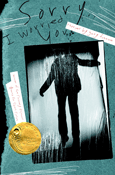
    Dr. Fincke’s work has appeared publications such as Harpers, Newsday, The Kenyon Review, and Doubletake. His poem “The Sorrows,” was recently read by Garrison Keillor on NPR’s Writer’s Almanac, and in 2003 he was awarded the Flannery O’Connor prize for his most recent collection of short stories, Sorry I Worried You. And he’s also won two Pushcart Prizes.

    Dr. Fincke’s stories and poems are great, but it’s his nonfiction that grabs me the most. Four years ago, as a prospective student, I heard him read what is now title essay of The Canals of Mars, a reflection on growing up during the Cold War, a time when Body Snatchers, communists, and sixth-grade dropout Jimmy Mason were all very real threats.

    My freshmen year, in my Intro to Creative Nonfiction class with Dr. Fincke, we looked at selections from his other memoir Amp’d, which chronicles the rise of his son’s career in rock music as lead guitarist for the band Breaking Benjamin.
    Really, Dr. Fincke’s the one who sparked my interest in the whole creative nonfiction genre to begin with. He’s the professor who taught me that “creative” and “nonfiction” can actually go together in the same sentence, that essaying is actually a really satisfying way to gain a deeper understanding of your world.

    So for all these reasons wrapped up together, I was excited to sit down and hear some world-class writing and pick up an autographed copy of the new book. For me, it’s opportunities like this that make Susquehanna the best place to be an undergrad creative writing major.

    More:
    *Dr. Fincke's name is pronounced "Fink," not "Finky."  Keillor is mistaken.

    Saturday, November 21, 2009

    Dante's Inferno

    The room was hot but silent as Dr. Giuseppe Mazzotta began to read from Canto 1:
    Midway upon the journey of our life
    I found myself within a forest dark,
    For the straightforward pathway had been lost.
    Ah me! how hard a thing it is to say
    What was this forest savage, rough, and stern,
    Which in the very thought renews the fear.
    So bitter is it, death is little more;
    But of the good to treat, which there I found,
    Speak will I of the other things I saw there.

    Dr. Giuseppe Mazzotta, the Sterling Professor of Humanities for Italian at Yale University, visited campus last Thursday to deliver a lecture on the role education plays in Dante's Inferno.

    I've never seen Isaacs Auditorium so full. They had to bring out extra chairs just to fit everyone in, and Dr. Mazzotta did not disappoint.  This was honestly the best lecture I've ever attended.

    Admittedly, I am a creative write/religion double major and a fan of the Comedia, so I may have a bias here, but it was more than just interesting.  For Dr. Mazzotta, Dante isn't just an area of expertise.  Dante is also his passion.  You could hear it in his voice and see it in his animated hand gestures.

    Dr. Mazzotta said that the Commedia is a journey of both mind and body, that for Dante simply knowing what justice is is not enough to make a person just.  The path up to the top of Mt. Purgatory begins with the road down into Hell.  The journey of conversion involves both intellect and passion.

    Intellect and passion.  I think that's what made Dr. Mazzotta's lecture so outstanding.  Not only did he know Dante inside and out, he had such a strong passion for Dante that this 700-year-old poem suddenly seemed relevant to our lives today.

    When President Lemons cut off the questions from the audience and thanked Dr. Mazzotta for coming, I thought, wow, it's over already?  Then I checked my cell phone and saw that an hour and a half had just flown by.